

Slide
Order online
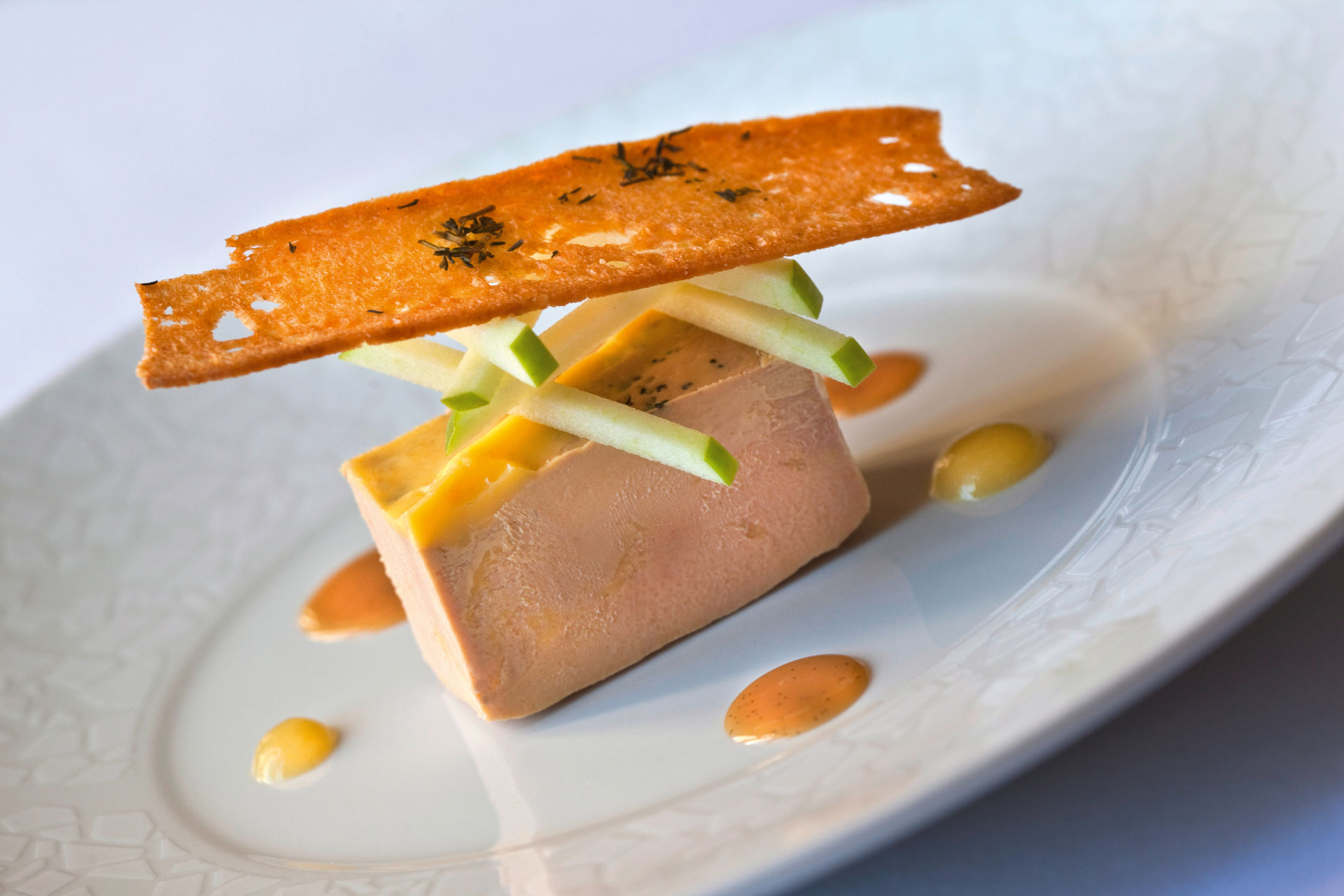
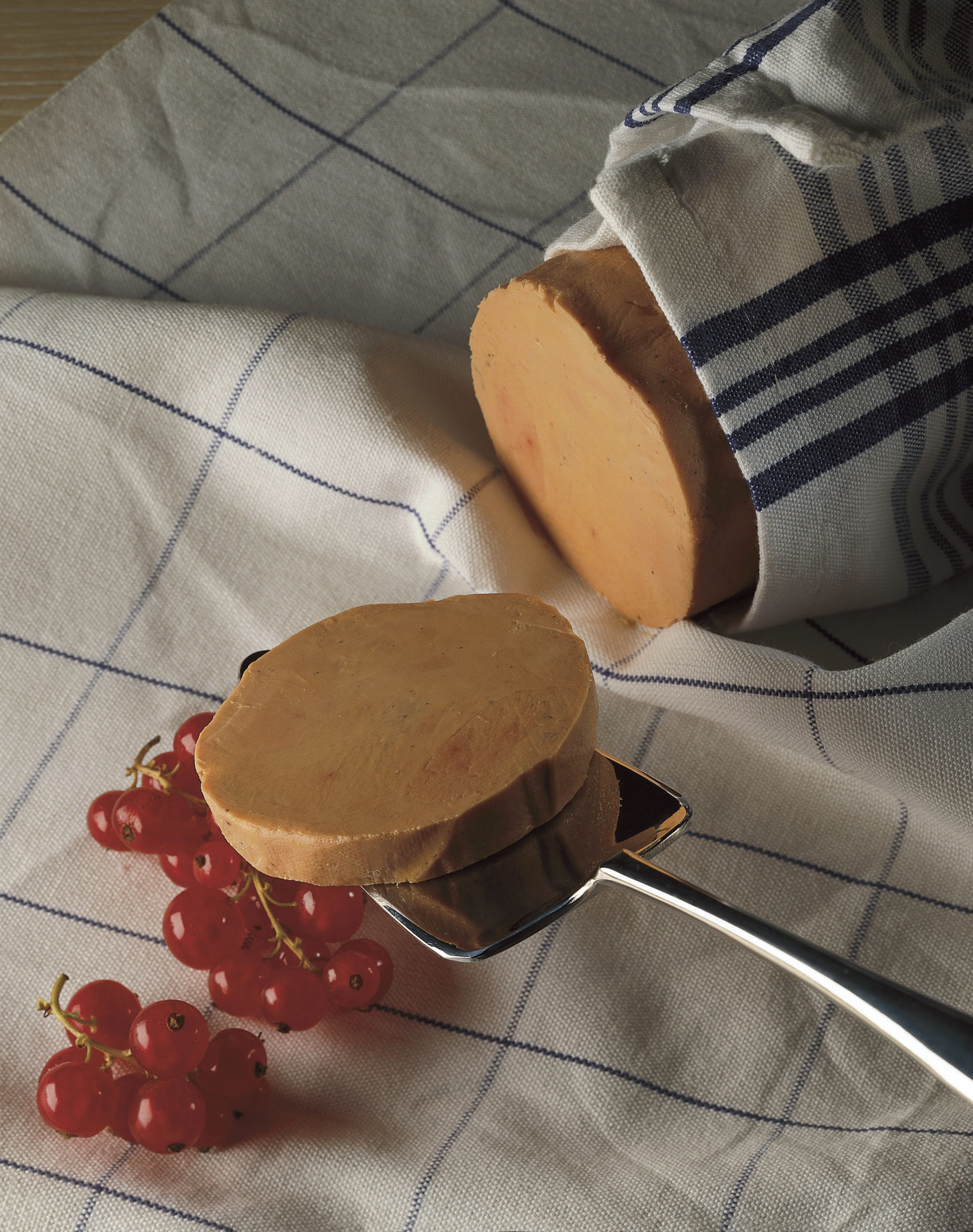
Fresh foie gras, half preserved foie gras , full preserved foie gras and more...
Slide
Order online
Fresh foie gras, half preserved foie gras , full preserved foie gras and more...
Slide
Order online
Fresh foie gras, half preserved foie gras , full preserved foie gras and more...


FOIE GRAS IN ROUND PASTRY CRUST
CAPITALE DU FOIE GRAS
Since the 18th century, Strasbourg has been known as the great center for the production of Foie Gras in France. In fact, it was here in Strasbourg, under the reign of Louis XVI, around 1780, that Jean-Pierre Clause, kitchen chef of the Maréchal des Contades, governor of Alsace, created the first “Foie Gras de Strasbourg” by stuffing a round crust with a whole foie gras surrounded by a fine farce of veal and bacon.
Known and appreciated by the Egyptians, the Greeks and the Romans who spread its use throughout the empire, goose foie gras was certainly present on the tables of Gallo-Roman Alsace.A tradition based on the absence of evidentiary documents says that this delicacy disappeared with the great invasions and did not reappear until the 18th century.In fact, it seems that goose foie gras was already produced in the Roman Empire by Jewish communities that excelled at force-feeding.
In the kosher diet, the goose holds an essential place, replacing pork in many uses, especially fat. The tradition of fattening geese has never disappeared in the Jewish communities of Alsace, which were very numerous in the Middle Ages. Was there an exchange with the Christians concerning the technique of force-feeding? In other words, was foie gras eaten in Alsace in the Middle Ages and in the 16th century, outside of Jewish communities?In the fourteenth and fifteenth centuries, in the cities of Alsace, goose farming reached such proportions that the magistrates were obliged to impose limits.In Strasbourg, ordinances regulated the way geese were fattened, requiring that they be fed on good grain. Alsatians ate goose liver, but was it foie gras?
In 1581, Marx Rumpolt published his Kochbuch in which he presented a recipe made from three kilos of foie gras bought from Bohemian Jews. In the 17th century, Buchinger published a recipe for goose liver cooked in wine.Throughout the 18th century, testimonies about Alsatian foie gras multiplied. There is also a lot of talk about the know-how of the Jews of Metz and Strasbourg (Legrand d’Aussy), the author obviously being unaware that the Jews were forbidden to live in Strasbourg until the Revolution.In fact, the fame of Strasbourg’s foies gras is essentially due, at least in the 18th and 19th centuries, to the foie gras pâté.It was around 1780 that Jean-Pierre Clause, cook to the marshal of Contades, is supposed to have perfected his foie gras pâté by enclosing a whole foie gras in a crust, set in a fine stuffing of veal and bacon. Admitted to the tribe of pastry chefs, Clause left the service of the marshal in 1784, married the widow of his pastry chef and set himself up as a pastry chef. He will be joined in Strasbourg by Nicolas Doyen, cook of the president of the Parliament of Bordeaux, chased away by the revolution, who will have the idea of the truffled foie gras couple.
Around 1850, the fame and supremacy of Strasbourg’s foie gras pâté was established, as Silvano Serventi points out in La grande histoire du foie gras. From the beginning of the 19th century, the nascent literature sings the praises of the pâté de foie gras de Strasbourg, and makes it one of the centerpieces of prestigious menus for the winter, the season when they are available on the market. »Foie gras pâtés, either from Strasbourg goose or Toulouse duck, are at their best in this season, because the livers have then acquired the complement of their fatness, and the truffles the complement of their perfume » writes Grimod de la Reynière in his Manuel des Amphitryons which was first published in 1808, specifying that « It is thus the most suitable large cold piece that can be served at this time (?). ) Indeed, nothing is better than an excellent pâté de foie gras ».
The Strasbourg foie gras pâté will become the preferred reference for 19th century gastronomes. Already Brillat-Savarin mentions only the Strasbourg specialty, in the conclusion of his Meditation XIII, reserved for gastronomic test tubes which, according to the author’s own definition, are of recognized flavor and indisputable excellence, and he describes the effect produced on an audience of gourmands by the arrival on the table of a pâté of foie gras from Strasbourg: « After a first service of high distinction, one served, among other things… a Gibraltar of foie gras from Strasbourg. This appearance produced a remarkable effect on the assembly (…) Indeed, all the conversations ceased by the fullness of hearts (…) and I saw succeeding one another on all the physiognomies the fire of the desire, the ecstasy of the enjoyment, the perfect rest of the beatitude ».
And we note the same enthusiasm in Borel: « But the Strasbourg speciality conquered Paris ». The Strasbourg-Paris mail coach carried quantities of pâtés ordered by Parisians. The Second Empire saw the creation of thirteen new manufacturers in Strasbourg. The generalization of the appertization process brought the foie gras of Strasbourg into the industrial era.
Next to the pâté de foie gras which remained the prerogative of specialized pastry shops, foie gras was made in terrines and then in tins, which gave a considerable boost to the product manufactured by sixty companies.The passage under the sovereignty of the Second Reich in 1871 did not change anything to the vogue of the Strasbourg specialty. Foie gras remains more than ever the top-of-the-range gastronomic specialty of Alsace. It was highly prized by the new masters, even if, as Hansi mischievously told Professor Knatschke’s daughter: « The fat on it is heavenly, the liver itself is good, but there are black things in it that cannot be eaten »!Also the breeding of geese for foie gras is very widespread and not only in the countryside around Strasbourg since, in the Sundgau, Hirsingue supplies the centers of Strasbourg; in Colmar and in the Kochersberg one raises the goose, a communal shepherd leading the animals to the pasture. The adult geese are sold to the numerous professional fatteners in Schiltigheim and Bischheim.
At the beginning of October, the messti of Hochfelden gives the signal for the beginning of the force-feeding campaign which lasts twenty days during which each bird must absorb twenty liters of corn.But very quickly the enormous demand of the Germanic world will make insufficient the breeding of the Alsatian geese. Producers in Strasbourg massively turned to Hungary, a large breeding region, for the purchase of livers. During this period, twenty-five new manufacturers were added to the others.At the beginning of the 20th century, Bruck already had a universal influence and a very flattering reputation. She had her terrines brought in from Sarreguemines, her metal cans from Hirschfeld Frères in Strasbourg, who also occasionally helped her out with foie gras; the spices were ordered from Salmon, basil, thyme, nutmeg, and others… In what proportions did they enter into the production? Mystery and secrecy!
From 1950, the modification of the conditions of exploitation of the Alsatian agriculture strongly marginalized the breeding of the geese. The Strasbourg manufacturers continued to source their products from Hungary, but also from Poland, Bulgaria and even Israel, where breeding was encouraged by the Jewish manufacturers of Alsace.
In the last twenty years, attempts have been made to give a new impetus to the breeding of geese. In 1981, Alsace had 5 breeders-producers, thirty stuffers producing 33 tons of livers, preservers and restaurant owners processed up to 350 tons. Despite the vicissitudes, the quality of the product has never wavered, because if the reputation of foie gras from the South-West is based on the quality of the land, that of Strasbourg’s foie gras has been built on the know-how of its pastry chefs and canners, of which the house of Georges BRUCK is the worthy representative.
Text from the book » L’alsace » Edition Roland Hirlé
DISCOVER MAISON GEORGES BRUCK
les FOIEs GRAS de STRASBOURG - family6owned company

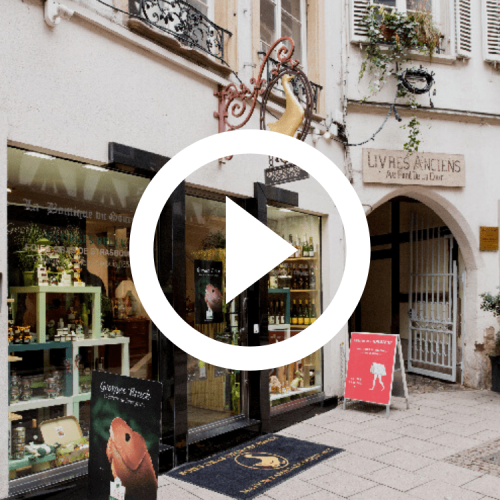

OUR STORE ONLINE
Fresh foie gras, half preserved foie gras, full preserved foie gras and more...
GEORGE BRUCK’S TEAM
les FOIEs GRAS de STRASBOURG - FAMILY-OWNED COMPANY
« We are anchored in a culture of know-how since 1852. Our company is a foie gras manufacture, a unit of handmade production carried out by craftsmen, trained cooks who know the song of gestures and the know-how of the past.
We are passionate about foie gras. »
We are passionate about foie gras. »
OPINIONS

Translated from French to English: « Very professional company, with a unique know-how, which I trust 100%! I enjoyed myself, it's not the first year that I take Georges Bruck foie gras, and it's always a pleasure to share it with my loved ones. Thank you for everything! »
AGATHE TISSERAND
THE PRESS TALKS ABOUT US
GEORGES BRUCK FOIE GRAS IN THE PRESS

